Water Solutions Directory
An index of the world's most promising water intervention technologies, categorised by application to help you find the best fit for local community needs.
 Extraction & Drilling
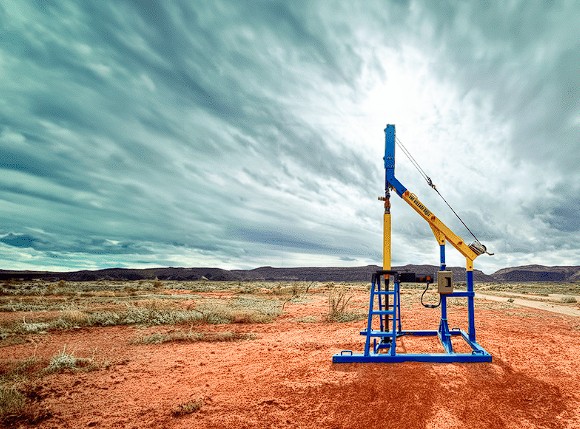
Village Drill (Manual Hybrid)
A revolutionary human-powered drilling machine that bypasses heavy truck transport constraints. It drills down to 250 feet, keeping project capital in the local economy by employing trained regional operators.
Low self-supply viability. Rigs are usually managed by regional NGO or social enterprise hubs, though operated manually by trained local teams rather than foreign drilling contractors.
Key Advantages
- ✓Human-powered (no fuel)
- ✓Extremely portable for remote access
- ✓Empowers local micro-enterprises
 Filtration & Treatment
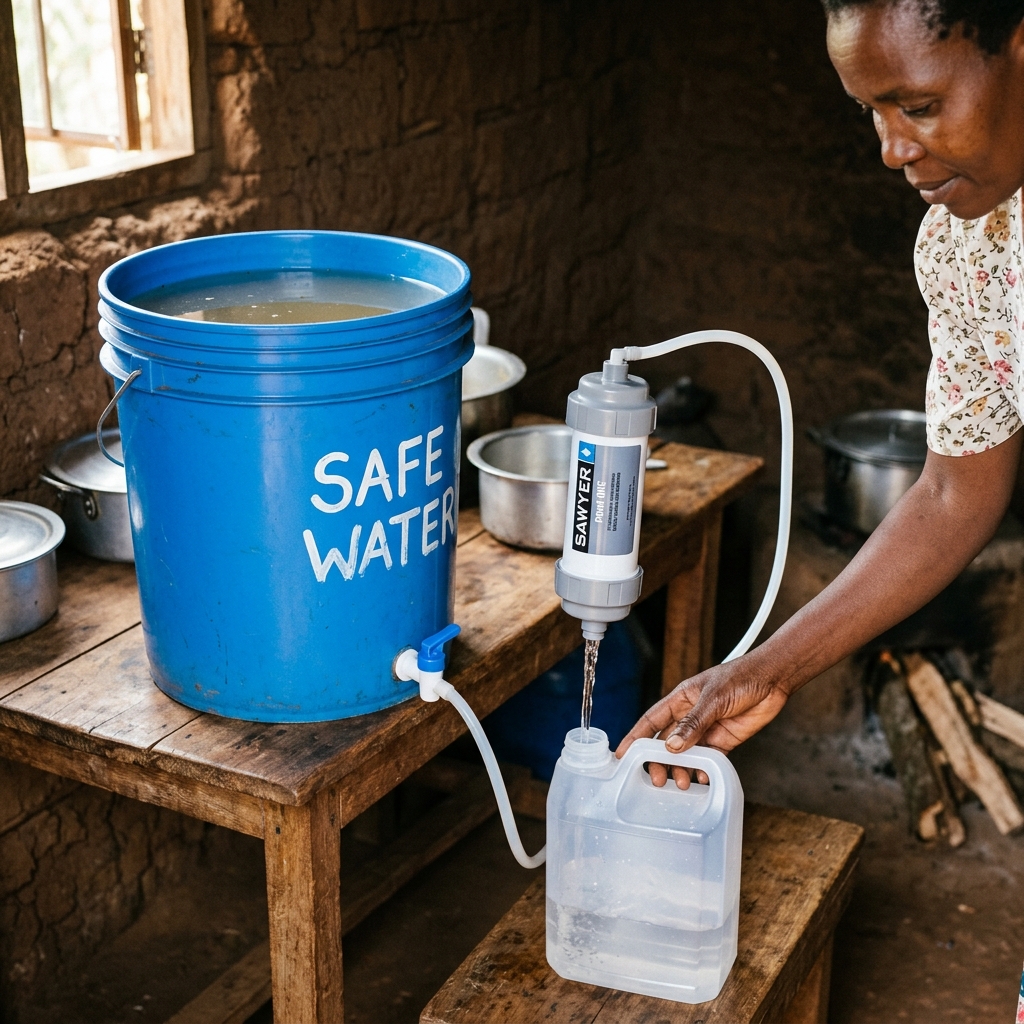
Sawyer Hollow-Fiber Membrane Filters
Gravity-operated point-of-use filter units with 0.1-micron absolute pores. They physically remove 99.9999% of bacteria and protozoa, operating without electricity or chemicals, and can last 10+ years with simple syringe backwashing.
Extremely high self-supply viability. Individual families can easily purchase, install, and clean these filters independently (ideal for point-of-use self-reliance).
Key Advantages
- ✓10+ year lifespan
- ✓Ultra-low cost per person ($1/yr)
- ✓No replacement parts or chemicals needed
 Filtration & Treatment
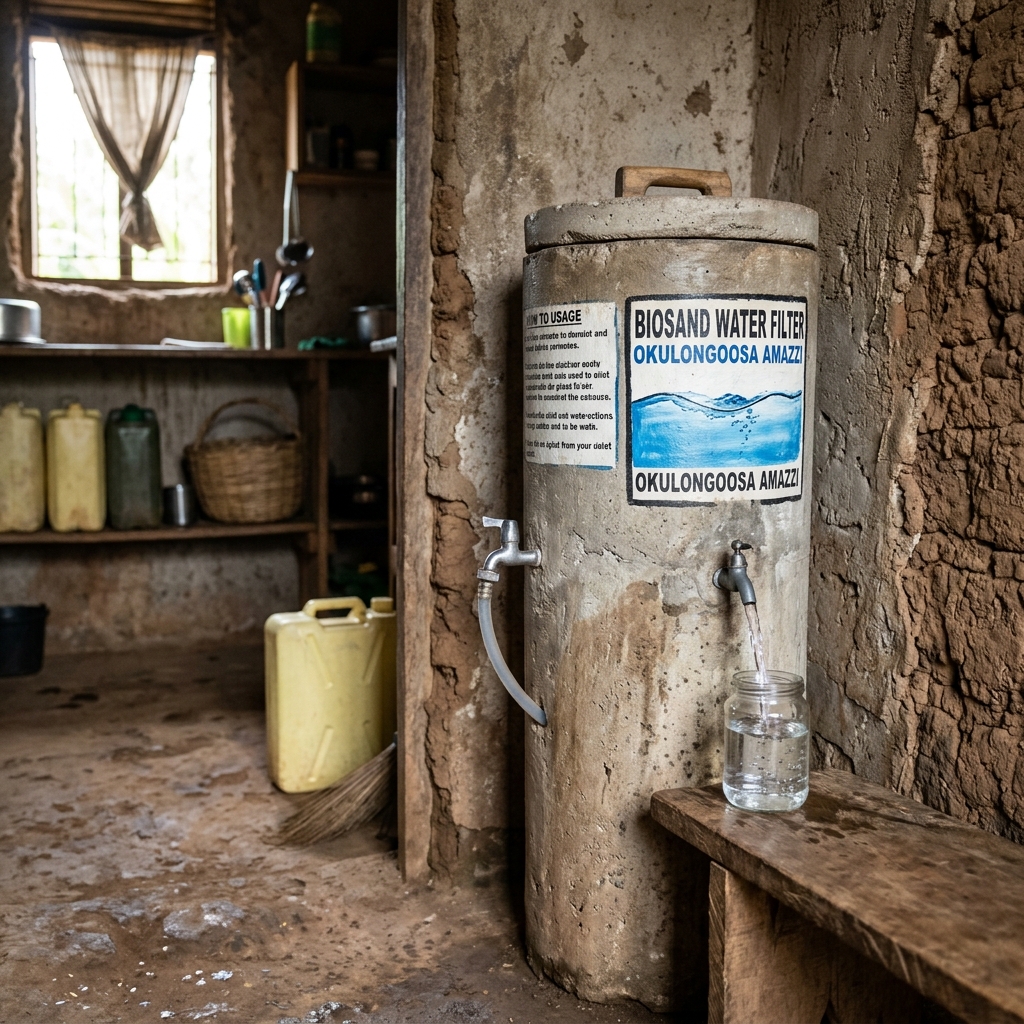
Biosand Sand & Gravel Filters
Household-scale concrete or plastic containers containing structured layers of sand, gravel, and an active biological layer (schmutzdecke) that consumes pathogens. Highly resilient and built with 100% locally sourced materials.
High self-supply viability. Concrete filters can be cast locally by families or local entrepreneurs using locally available sand, gravel, and simple reusable molds (following the CAWST model).
Key Advantages
- ✓Resilient, infinite lifespan
- ✓Made entirely of local materials
- ✓No ongoing running costs
 Extraction & Drilling
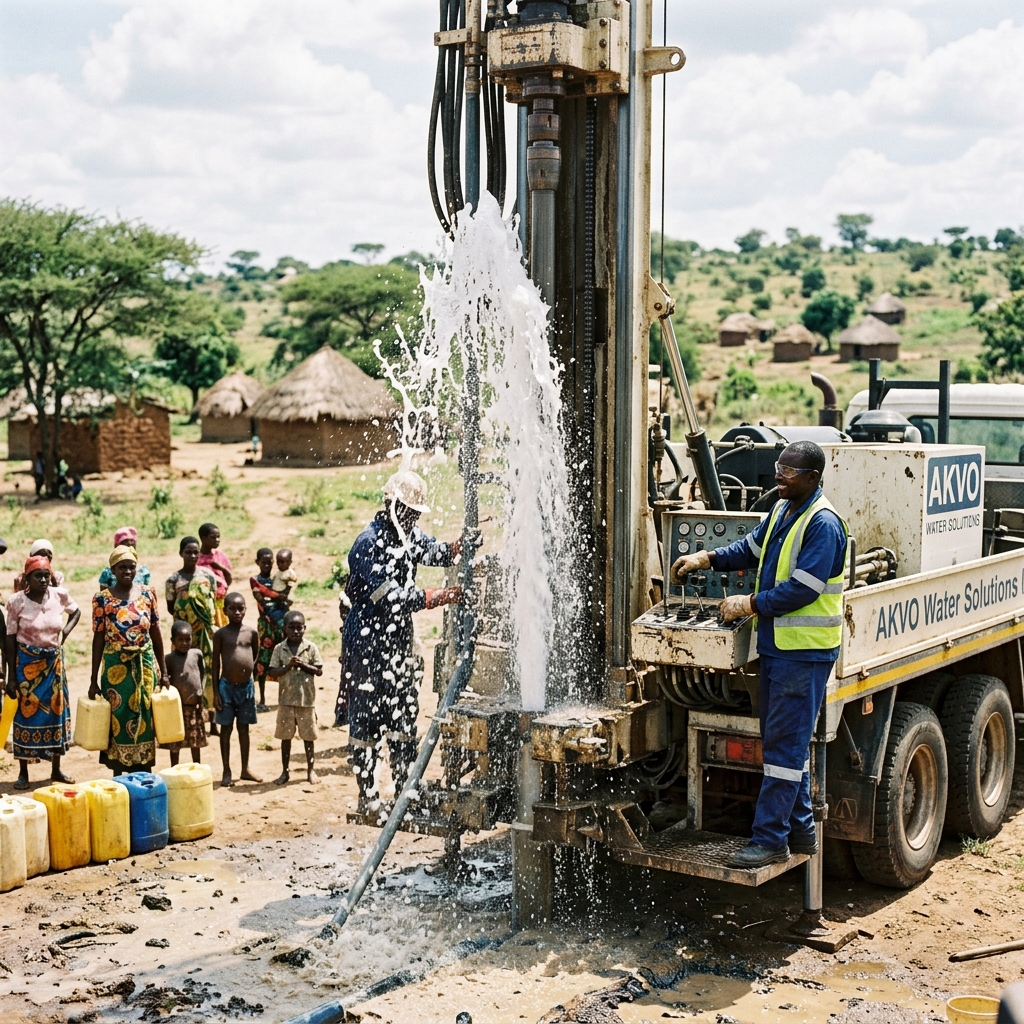
Boreholes & Deep Aquifer Wells
Deep, machine-drilled wells that tap into high-yield, protected sub-surface aquifers. They are sealed from biological surface contaminants and fitted with heavy-duty handpumps or solar submersibles.
Low self-supply viability. Tapping deep aquifers requires high-cost motorized drilling rigs, geological siting, and collective public or NGO financing.
Key Advantages
- ✓Consistent, year-round water
- ✓Protected from cyclones & droughts
- ✓Extremely high volume capacity
 Extraction & Drilling
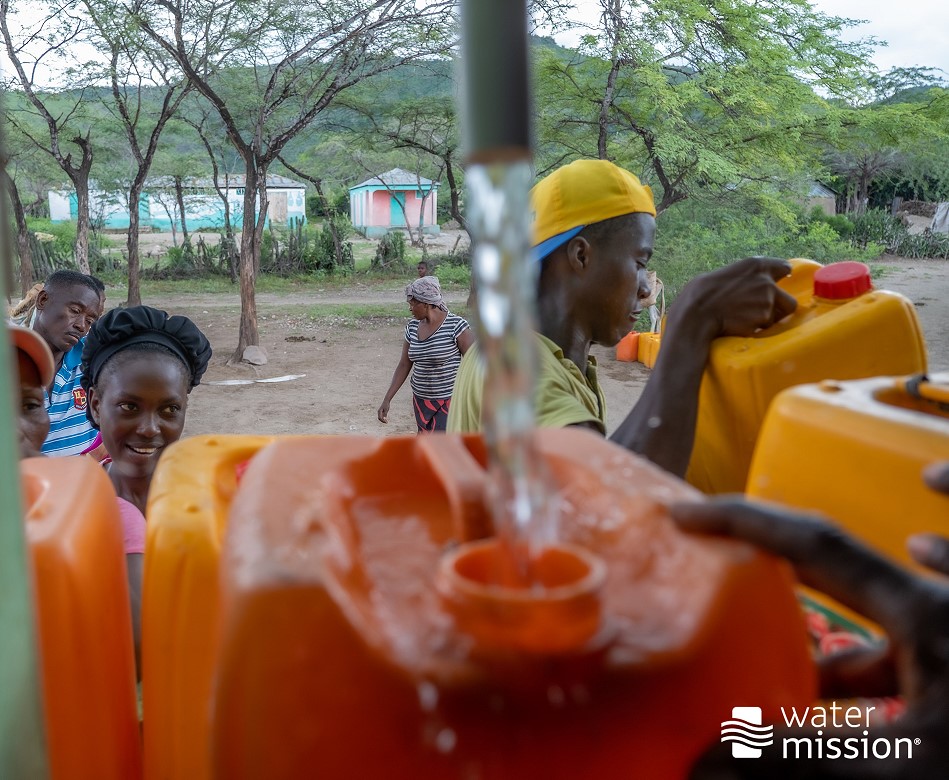
Gravity-Fed Spring Systems
Harnessing elevated natural springs, encasing the source in concrete, and gravity-piping clean water down to local communal tap stands. Requires zero pump electricity or complicated mechanical parts.
Moderate self-supply viability. Concrete spring boxes and gravity pipelines are easy to maintain, but require collective community labor and rights management to install.
Key Advantages
- ✓Zero pumping energy needed
- ✓Minimal mechanical parts to break
- ✓Extremely low maintenance requirements
 Finance & Capacity
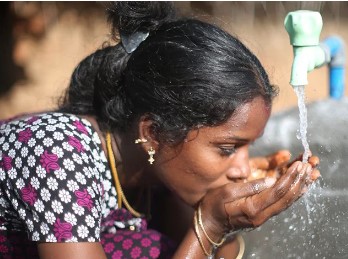
WaterCredit (Microfinance Loans)
Providing affordable, low-interest microfinance loans to households, enabling them to invest in their own customized water taps, piping, or toilets instead of waiting for years on charity hand-outs.
Specifically designed to accelerate Supported Self-Supply. Rather than waiting for charity grants, households secure small loans to immediately fund their own water infrastructure.
Key Advantages
- ✓Dignity and choice of solution
- ✓High repayment rates (99%)
- ✓Capital recycles to help more families
 Filtration & Treatment
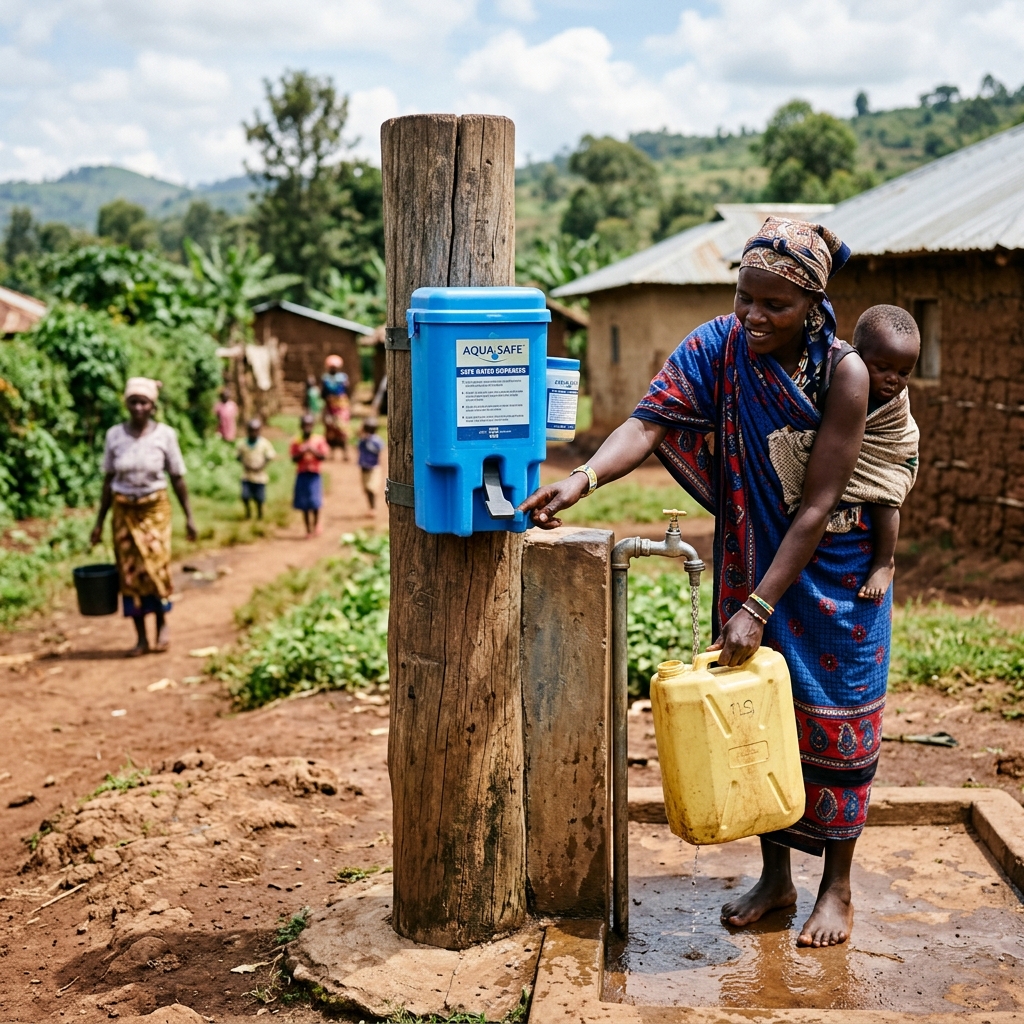
Chlorination Dispensers
Point-of-collection chlorine dispensers situated at local water sources. Community members add a precise, safe dose of chlorine to eliminate waterborne pathogens and protect water during home storage.
Moderate self-supply viability. Very low cost, but requires a functional supply chain for chlorine refills and a shared dispenser system at community water points.
Key Advantages
- ✓Eliminates viruses (highly effective)
- ✓Extremely cheap per person
- ✓Protects against container contamination
 Extraction & Drilling
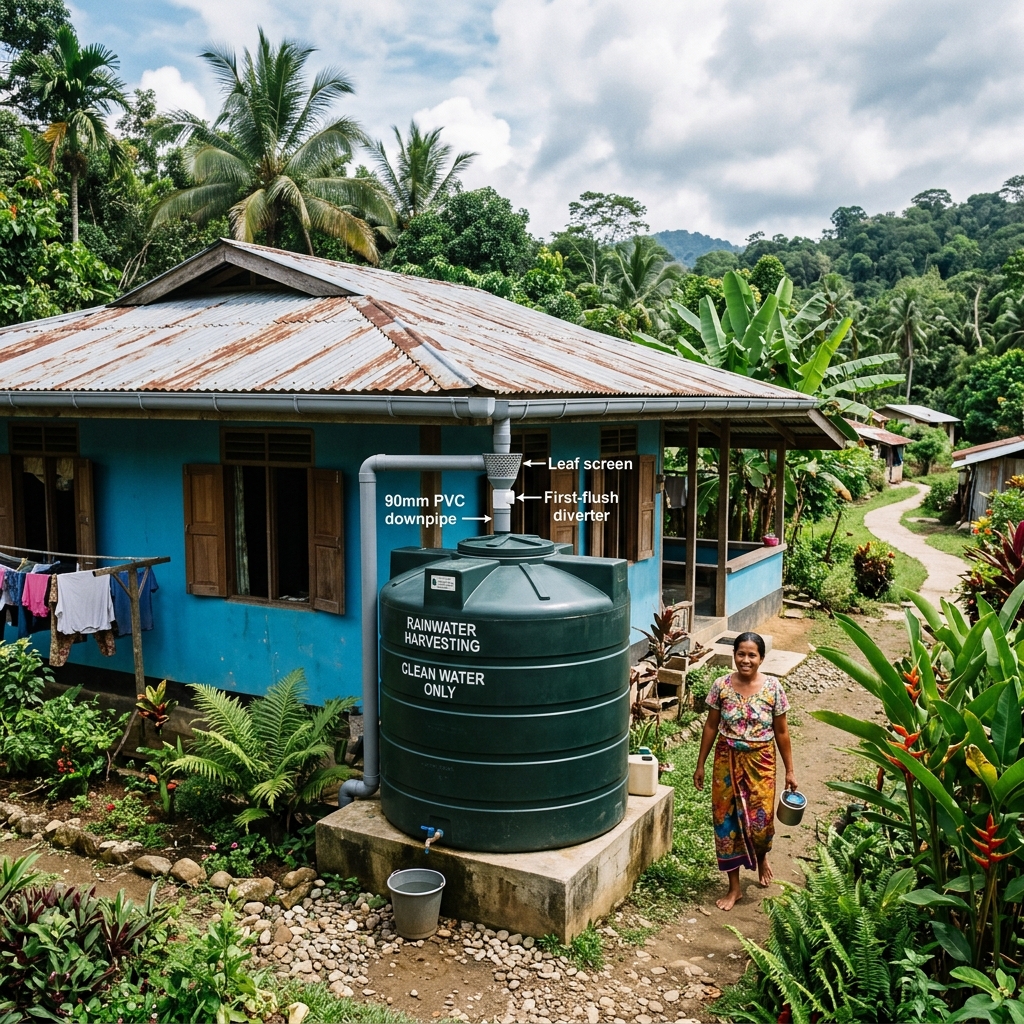
Rainwater Harvesting Systems
Installing rooftop guttering, coarse filters, and high-capacity storage tanks on local homes, schools, or clinics to capture and store seasonal volcanic or oceanic rain.
Highly viable for self-supply. Households can incrementally construct gutter collectors and storage jars using local mortar and wire reinforcement (such as the successful Thailand Ferrocement Jar model).
Key Advantages
- ✓Completely free source water
- ✓Requires no drilling or excavation
- ✓Ideal for volcanic & oceanic islands
 Finance & Capacity
WASH Training & Capacity Building
Community-led workshops teaching water safety, sanitation hygiene (WASH), filter maintenance, and financial budgeting to ensure local water committees can sustain the project indefinitely.
Supports self-supply indirectly by equipping households and local technicians with the skills and business hygiene to maintain water assets independently.
Key Advantages
- ✓Prevents project abandonment
- ✓Creates local technicians & jobs
- ✓Drastically reduces sanitary diseases
 Extraction & Drilling
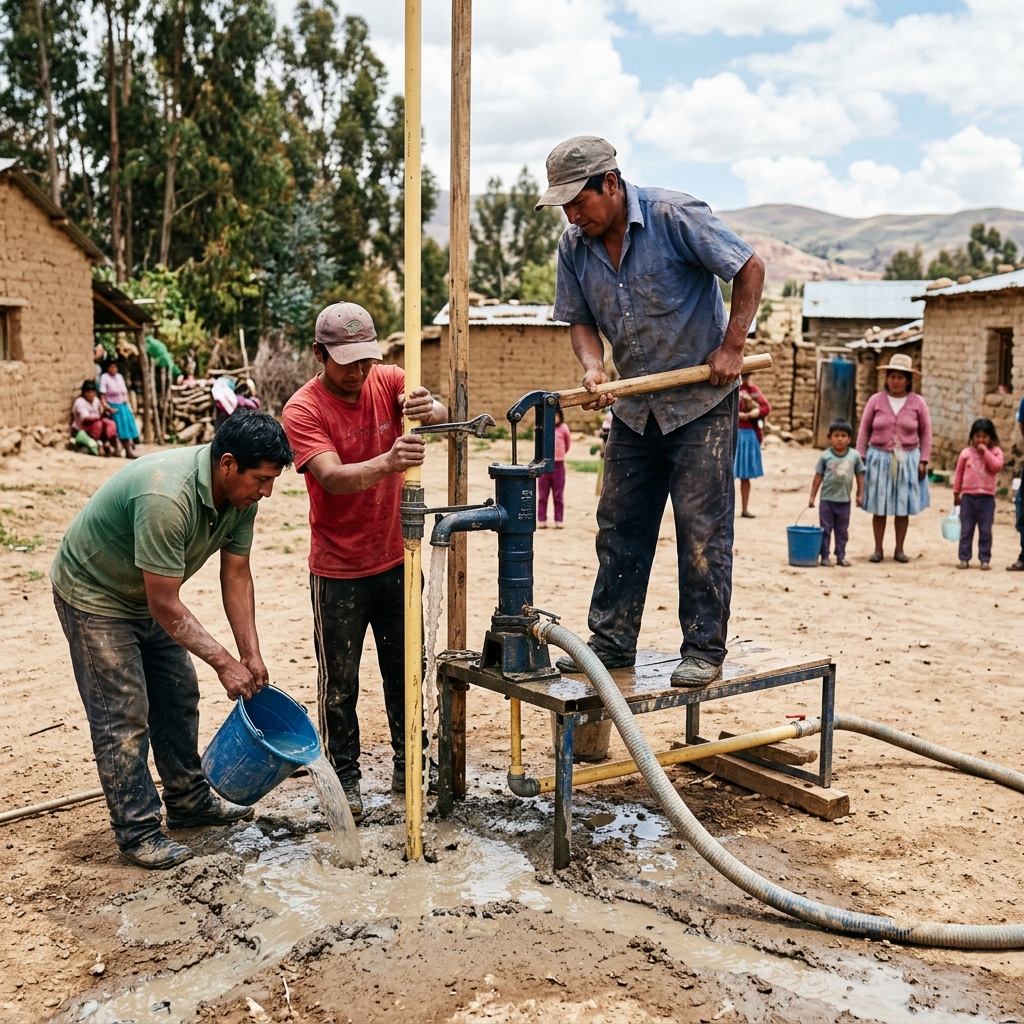
EMAS Manual Drilling
A highly economical manual drilling technique developed by the Escuela Móvil de Agua y Saneamiento (EMAS) in Bolivia. It uses manual percussion combined with water circulation (fluid injection) to drill wells down to 40 meters, typically using cheap, locally sourced PVC pipes.
Very high self-supply viability. Employs a low-cost fluid-percussion technique using cheap, locally available PVC pipes and iron rods, enabling individual households to self-finance their own wells.
Key Advantages
- ✓Extremely low capital cost (<$100)
- ✓Highly portable, built with local parts
- ✓Can be operated by a single person
 Extraction & Drilling
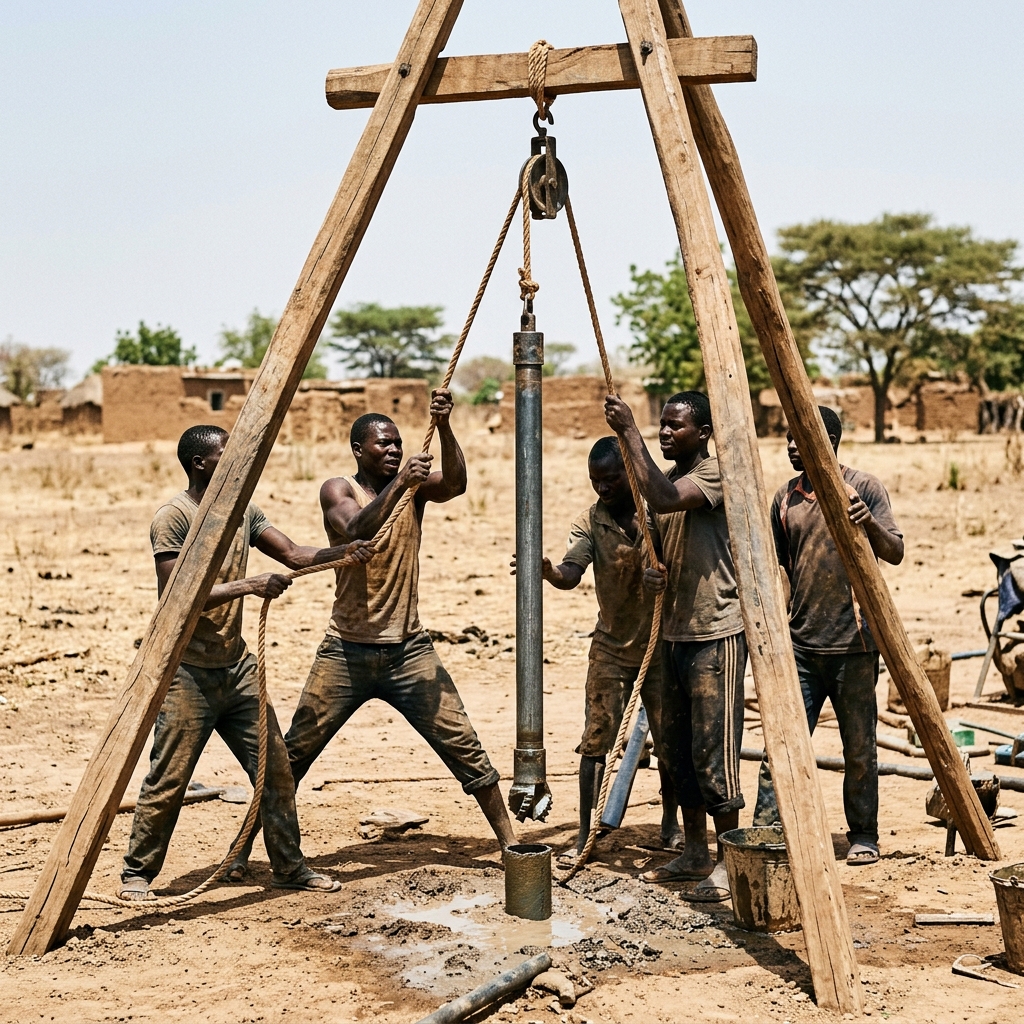
Baptist Manual Drilling
An open-source percussion-shackling manual drilling method designed for remote, low-resource settings. Utilizing simple steel piping, a rope-guided heavy drill bit, and manual water circulation, it penetrates alluvial clays and gravels up to 100 meters.
High self-supply viability. Developed as an open-source, rope-guided manual percussion system to enable local blacksmiths and toolmakers to fabricate drill kits for family water self-reliance.
Key Advantages
- ✓Low material cost
- ✓Reaches deep aquifers (up to 100m)
- ✓Open-source design for local fabrication
 Extraction & Drilling
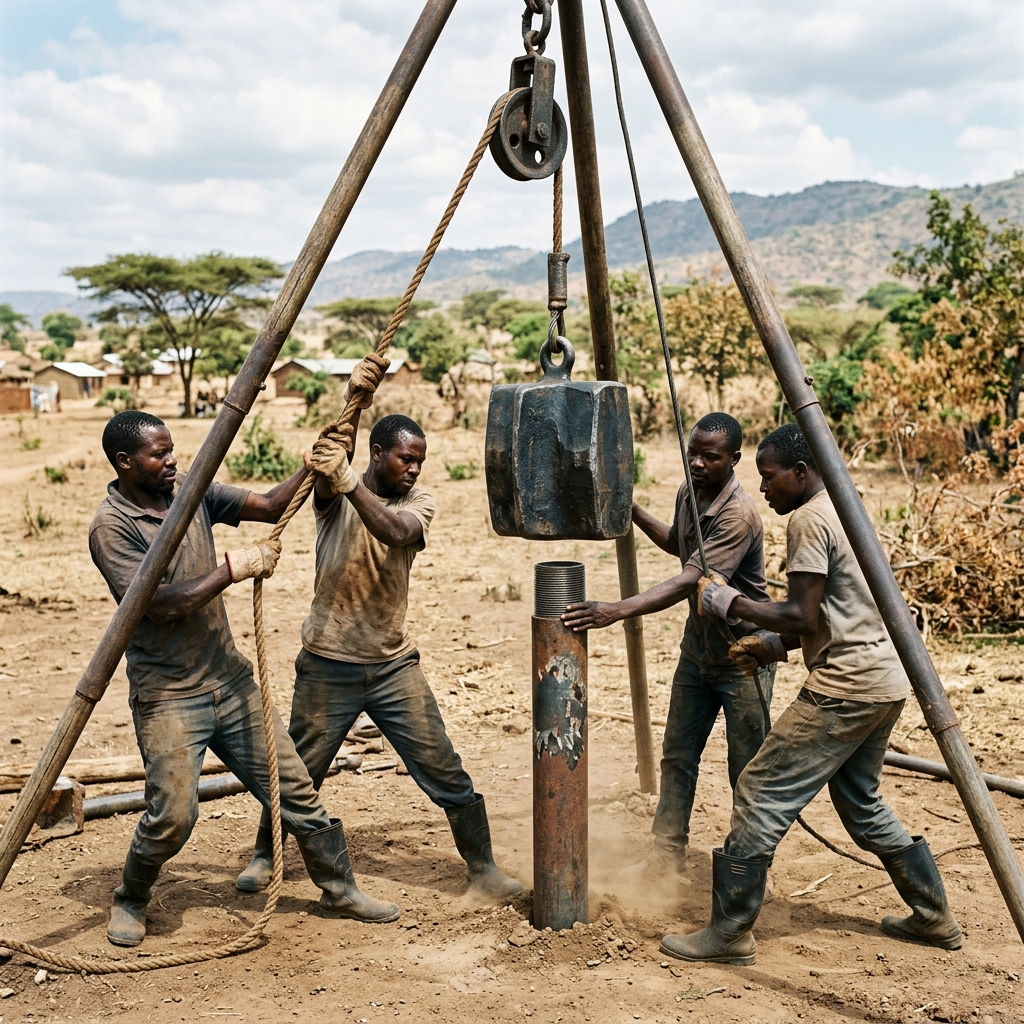
Stonehammer Percussion Drilling
A heavy manual percussion drilling technique using a metal tri-pod, pulleys, and a heavy sliding hammer. It breaks up compact soil, stiff clays, and thin rock layers, reaching depths of 30 meters.
Moderate self-supply viability. The heavy metal hammer requires blacksmithing, and operations require a team of 3-4 people, but is highly viable for local drilling micro-enterprises.
Key Advantages
- ✓Penetrates semi-hard layers and clays
- ✓Sturdy mechanical advantage via pulleys
- ✓Requires no motorized power
 Extraction & Drilling
Hand Auger Drilling
A classic manual drilling method that uses helical or bucket-shaped bits turned by hand extensions. Ideal for extremely shallow water tables in soft sand and clays, typically up to 15 meters.
Very high self-supply viability. Simple, lightweight hand-turned augers can be bought or fabricated locally and operated directly by families to tap shallow sandy aquifers.
Key Advantages
- ✓Zero water required for drilling
- ✓Simple operation and tool fabrication
- ✓Highly effective for shallow sandy wells
 Extraction & Drilling
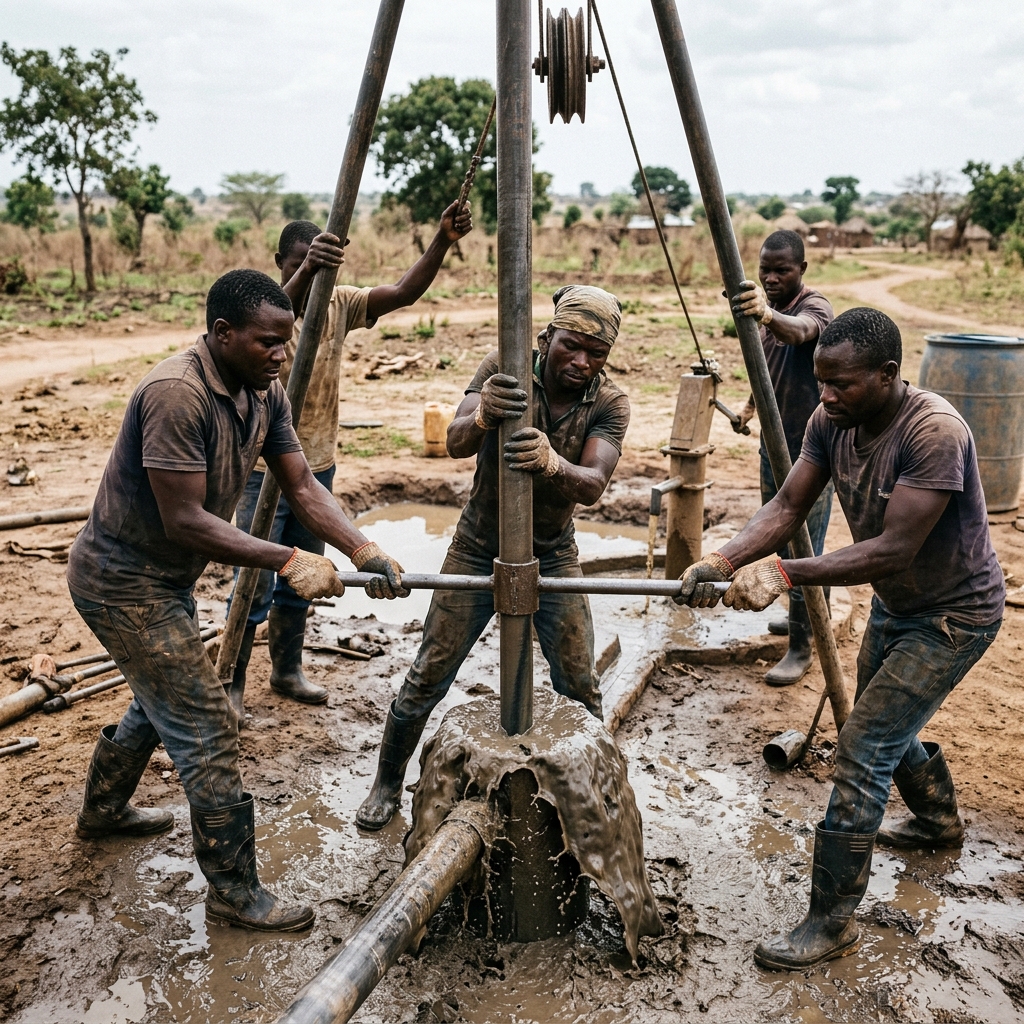
Rota-Sludge Manual Drilling
A rotary-percussion method developed by Practica Foundation. It uses a rotating drill pipe while using a manual pumping action to lift slurry (sludger method). Ideal for clay and sandy clay layers up to 40 meters.
Moderate self-supply viability. A highly effective rotary-percussion technology designed by Practica Foundation; requires slightly higher technical skills and coordination, making it ideal for local SME drillers.
Key Advantages
- ✓Combines percussion and rotation
- ✓Highly effective in sandy clays
- ✓Inexpensive local fabrication
 Extraction & Drilling
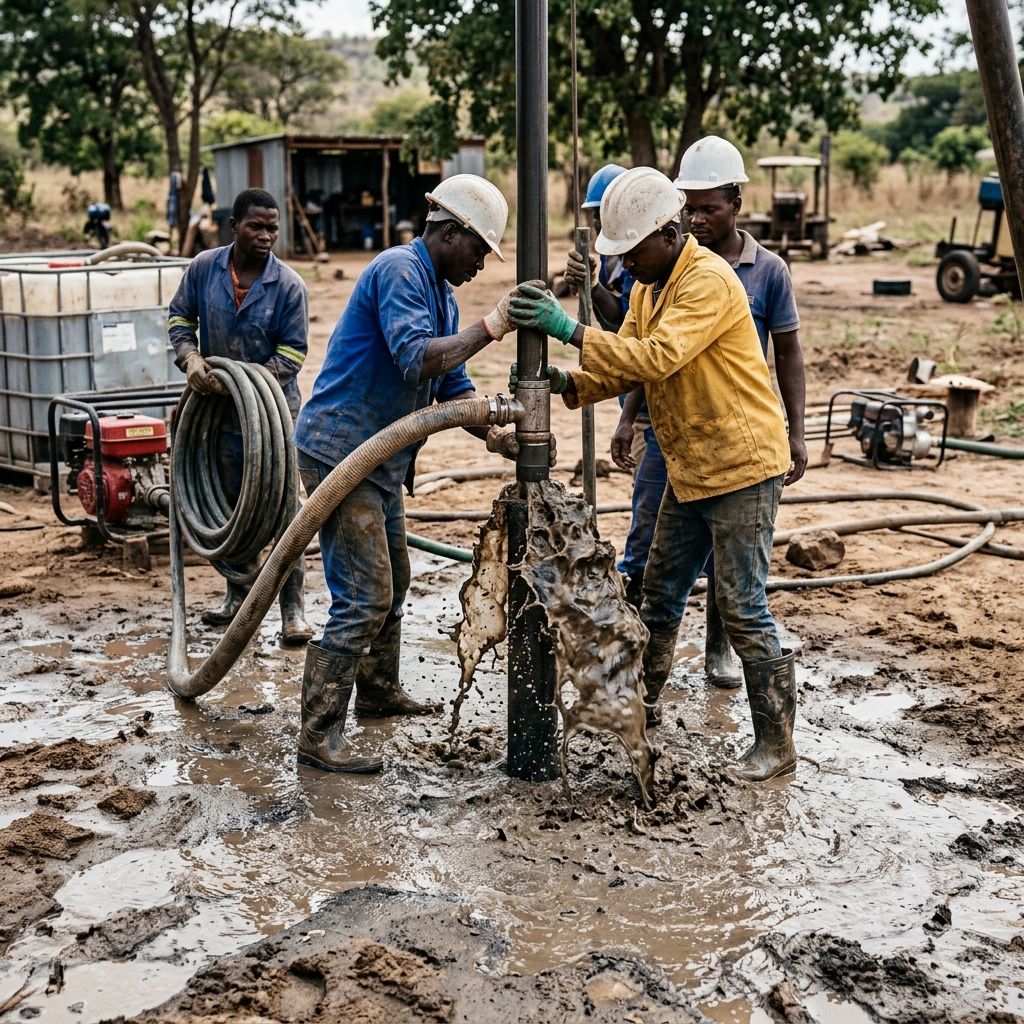
Manual Jetting (Wash Boring)
A rapid manual drilling technique that pumps pressurized water down the inside of the drill pipe to wash away loose sand and silts. Can sink 2-4 inch boreholes to depths of 45 meters in a single day.
High self-supply viability. Fast wash-boring method in loose sandy coastal regions. Requires a small engine pump, making it a very quick and popular method for household-level installations.
Key Advantages
- ✓Extremely rapid penetration in loose sand
- ✓Simple PVC/metal piping layout
- ✓Requires low manual labor force
Extraction & DrillingPortable Solar Pumps & Surface Intakes
Extracting fresh water from rivers, streams, ponds, or shallow wells using lightweight, low-cost solar surface pumps (such as those featured on portablesolarpumps.com) or commercial fuel/electric centrifugal pumps. Due to physical atmospheric limits, these surface centrifugal units have a strict maximum suction lift depth of 7 meters, but offer zero running costs and are portable (15kg) to prevent theft.
High self-supply viability. Individual families or small groups can purchase portable solar pump kits (including solar panels and hoses) for household supply and small farm irrigation, bypassing expensive borehole drilling costs where surface water is nearby.
Key Advantages
- ✓Extremely portable (prevents theft)
- ✓Zero running costs via solar panels
- ✓Low-cost ($150 - $250) irrigation and household lift
 Extraction & Drilling
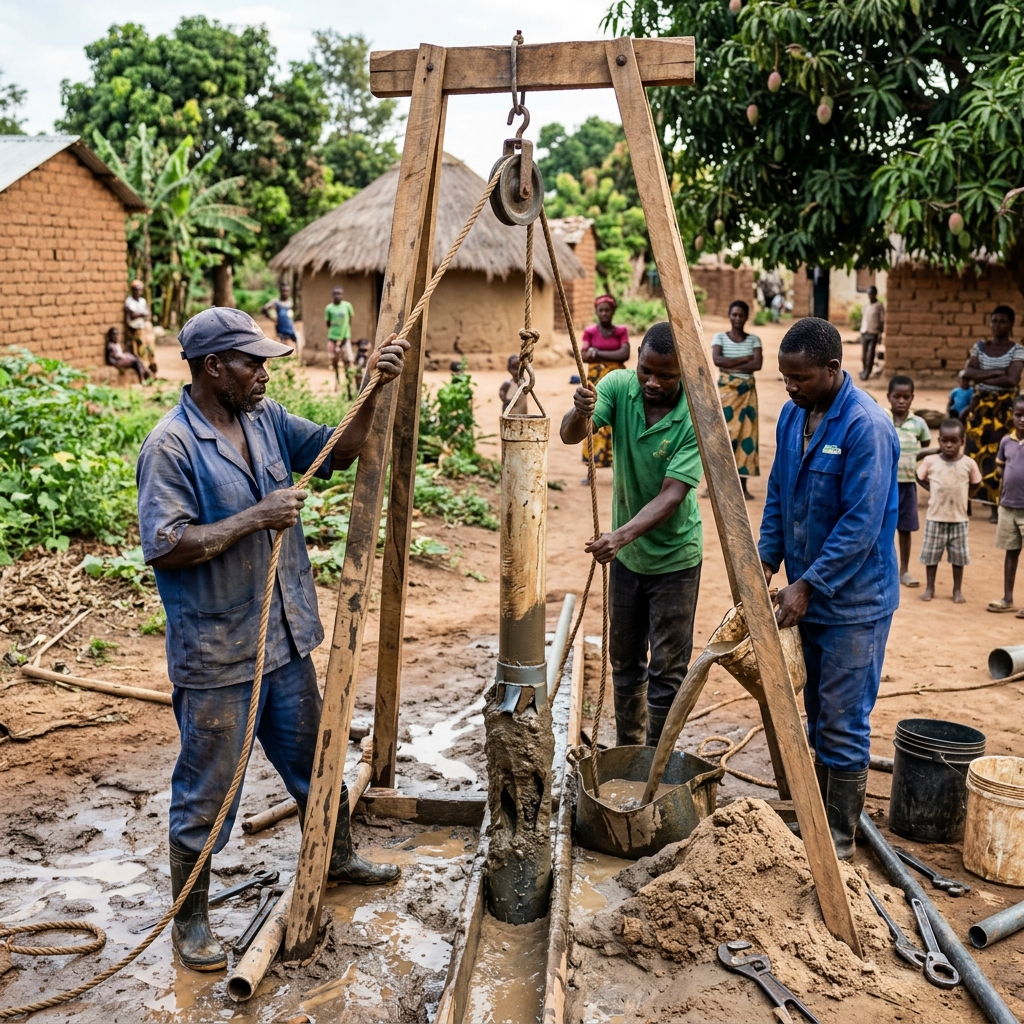
Mzuzu Drill & Tube Bailer
A manual, low-cost borehole drilling method developed by the SMART Centre in Mzuzu, Malawi. Combining an auger, a stone punch, and a poly-pipe tube bailer, it drills tube wells down to 30 meters in sand, clay, and gravel without requiring a tripod, drilling mud, or complex setups.
Very high self-supply viability. The drilling tools are extremely light, made of local parts, and can easily be fabricated or rented by individual households.
Key Advantages
- ✓Extremely low capital cost ($50–$300)
- ✓Highly portable, no heavy tripod needed
- ✓Ideal for deepening existing dry wells
 Extraction & Drilling
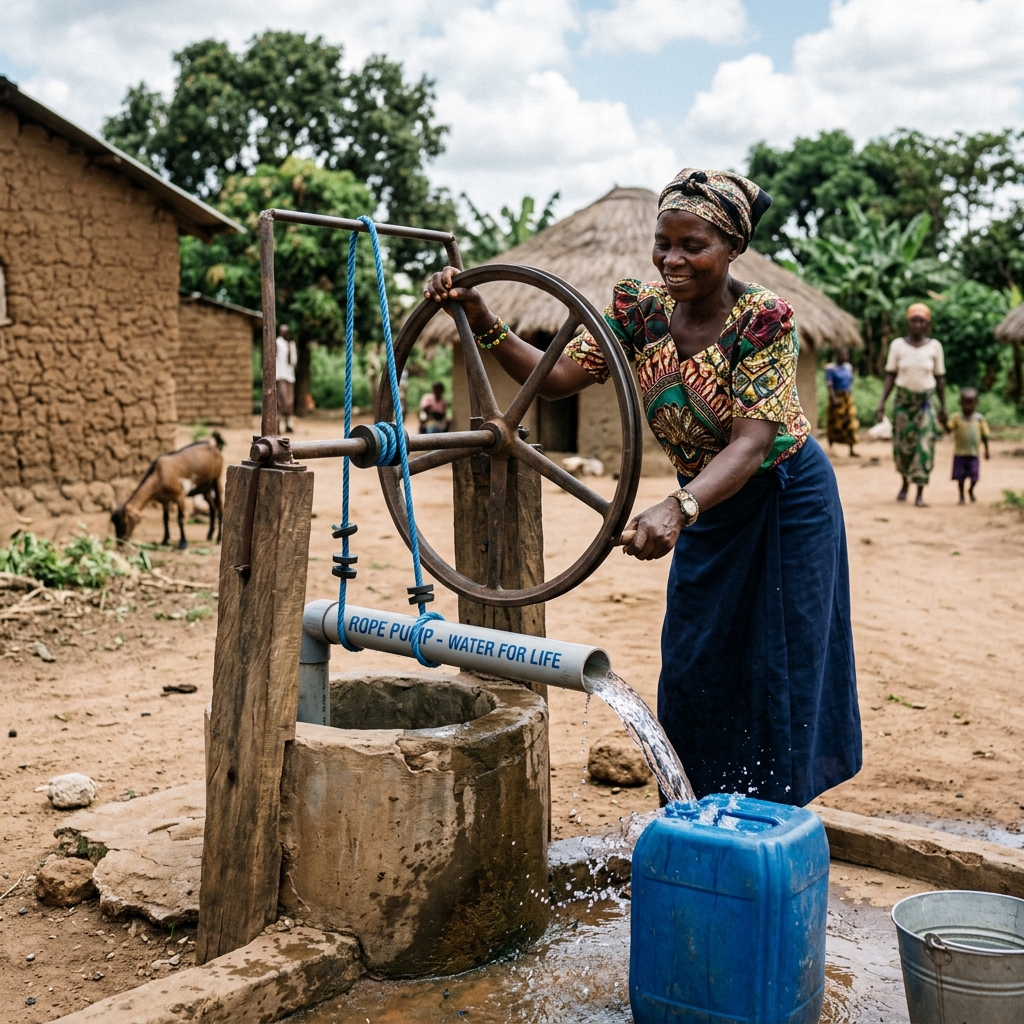
Rope Pump (SMARTech)
An extremely low-cost, hand-operated positive displacement pump designed for household-level water supply and micro-irrigation. It uses a looped rope with molded plastic washers to lift water through a PVC pipe from shallow wells or boreholes up to 35 meters. It is easily fabricated by local workshops using standard bicycle parts and scrap metal.
Extremely high self-supply viability. Households can own, operate, and maintain their own Rope Pumps. Repair parts like leather washers, rope, and PVC pipes are widely available in rural markets.
Key Advantages
- ✓Low fabrication cost ($80–$150)
- ✓100% locally repairable without specialist tools
- ✓Lifts water from depths up to 35 meters
Extraction & DrillingGroundwater Recharge (Tube Recharge)
A low-cost rainwater harvesting and aquifer replenishment system designed to channel roof and surface runoff directly into the ground through a simple filter. This recharges the local water table, preventing manual boreholes and hand-dug wells from going dry during the dry season.
High self-supply viability. Individual households can construct direct tube recharge systems using basic plastic pipes and sand/gravel filter chambers.
Key Advantages
- ✓Prevents shallow wells from drying up
- ✓Extremely low-cost ($40–$100)
- ✓Reduces surface erosion and runoff flooding
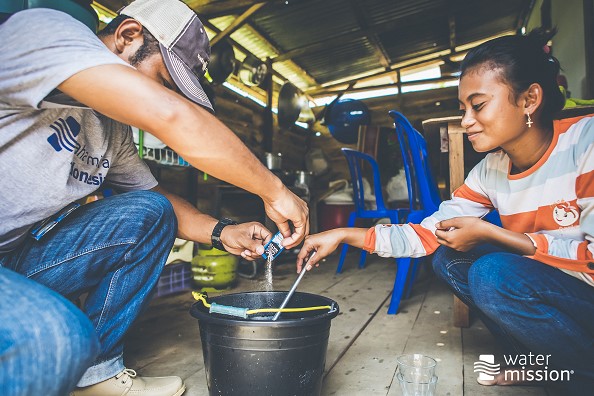 Extraction & Drilling
Hand-Dug Shallow Well
Traditional manually dug wells that access shallow groundwater tables. Excavation is performed using simple hand tools, and the well is lined with concrete rings to prevent collapse, providing highly accessible, low-cost decentralized water.
High self-supply viability. Households and small farmer groups can organize manual excavation using local labor and materials, establishing their own direct water supply.
Key Advantages
- ✓Extremely low capital cost
- ✓No heavy machinery or specialized fuel required
- ✓Easily maintained by local community members
Extraction & DrillingPump-Assisted Spring Box
A protected spring system that collects high-quality artesian water in a concrete chamber and uses a solar submersible pump or hydraulic ram pump to lift the water uphill to elevated communities.
Moderate self-supply viability. Solves gravity limitations for uphill communities, but requires collective investment and solar pump mechanics support.
Key Advantages
- ✓Protects spring water from surface contaminants
- ✓Solar-powered lift to elevated communities
- ✓Provides consistent, pressurized delivery
Finance & CapacityPrepaid Water ATM (Smart Kiosk)
RFID-enabled automated water dispensing kiosks that accept mobile money or prepaid cards. Perfect for dense, tenure-insecure informal settlements (slums), reducing water vendor cartels and corruption.
Low self-supply viability. Designed for communal and municipal utility management, requiring network coverage and RFID/mobile-money transaction processing platforms.
Key Advantages
- ✓Eliminates corruption and middleman fees
- ✓Provides 24/7 automated clean water access
- ✓Operates off-grid using solar arrays
Filtration & TreatmentCentralized Treatment Kiosk (UF/RO)
Containerized multi-stage water purification kiosks utilizing ultrafiltration (UF) and reverse osmosis (RO) membranes to process heavily contaminated surface water or brackish groundwater.
Low self-supply viability. Requires significant capital investment, reliable power, specialized maintenance routines, and replacement membrane supply chains.
Key Advantages
- ✓Completely removes heavy metals, salinity, and pathogens
- ✓High-purity industrial grade treatment
- ✓Scalable containerized design
Filtration & TreatmentHousehold Secondary HWTS (RO/UV)
Point-of-use household water treatment systems (HWTS) such as under-sink active carbon, reverse osmosis, or UV disinfection, designed to provide secondary safety for intermittent municipal tap lines.
High self-supply viability. Installed directly by individual households inside their homes to treat tap water, requiring only basic plumbing skill and cartridge replacements.
Key Advantages
- ✓Removes residual heavy metals, chlorine, and pathogens
- ✓Protects against contamination in municipal pipelines
- ✓Plug-and-play domestic installation